Architecture
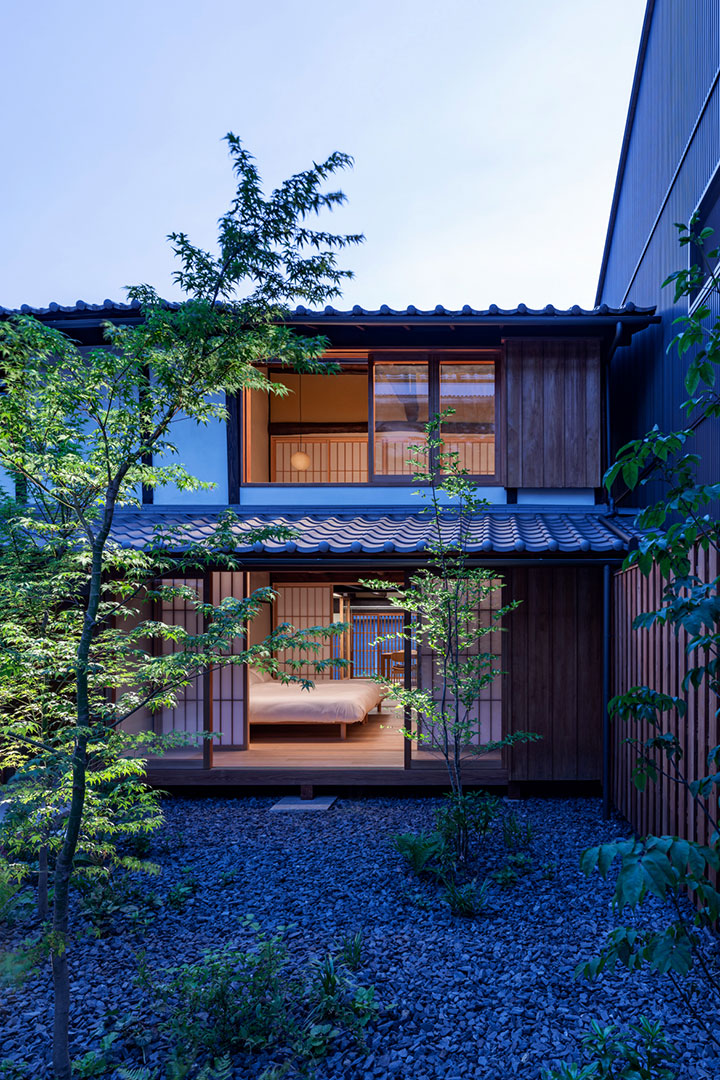
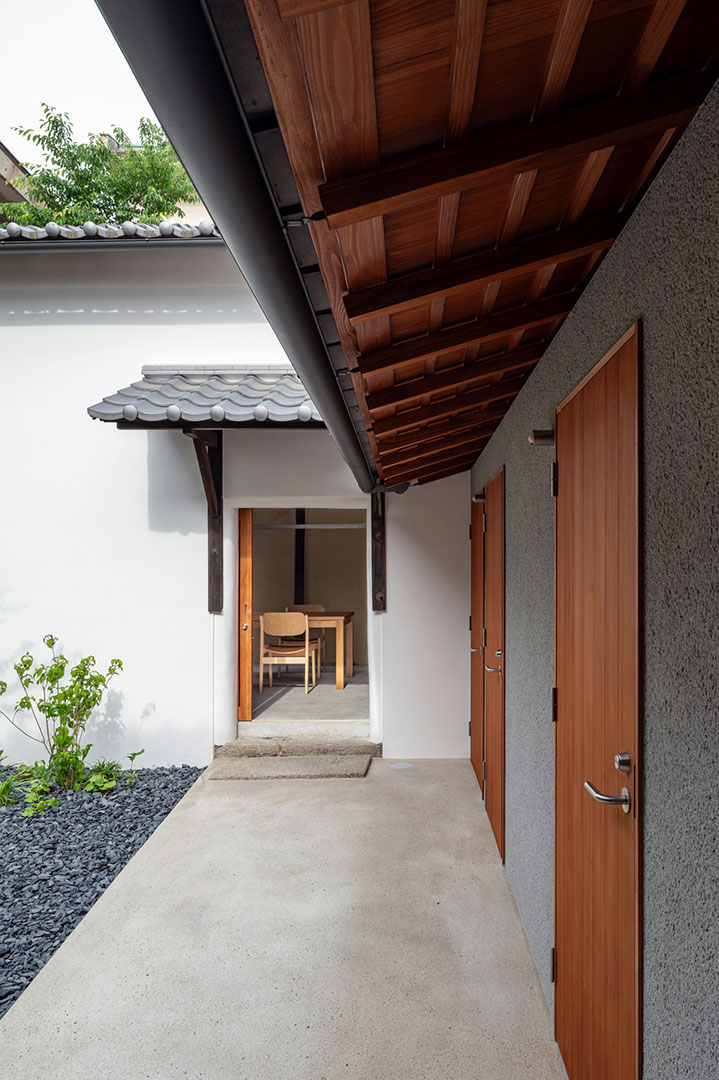
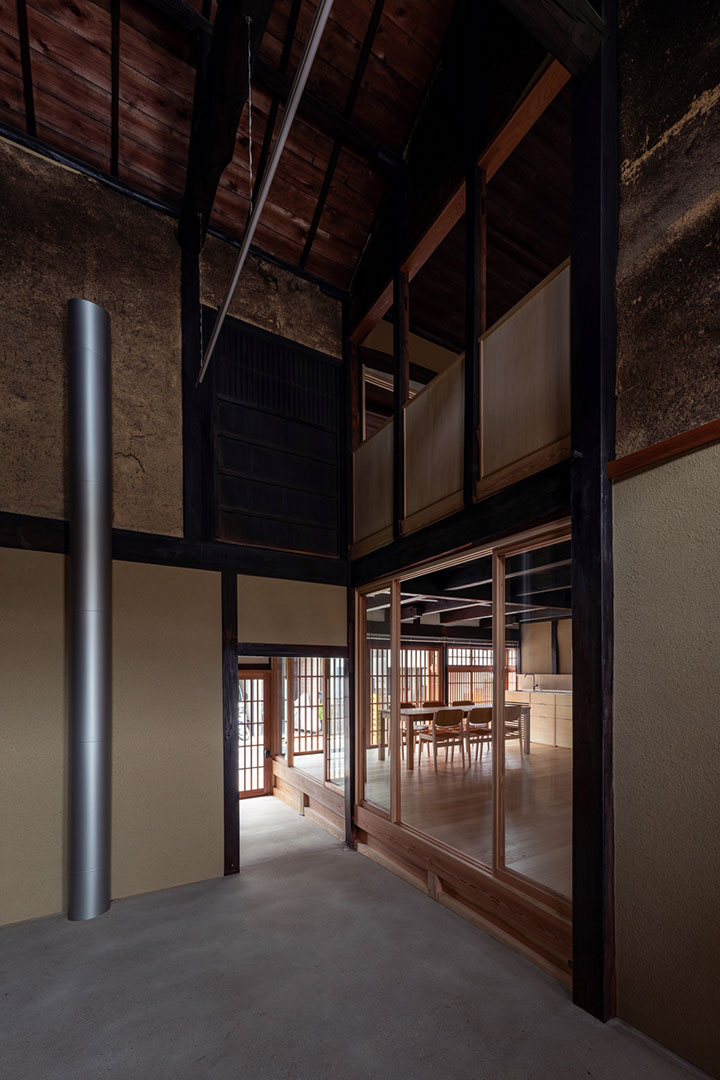
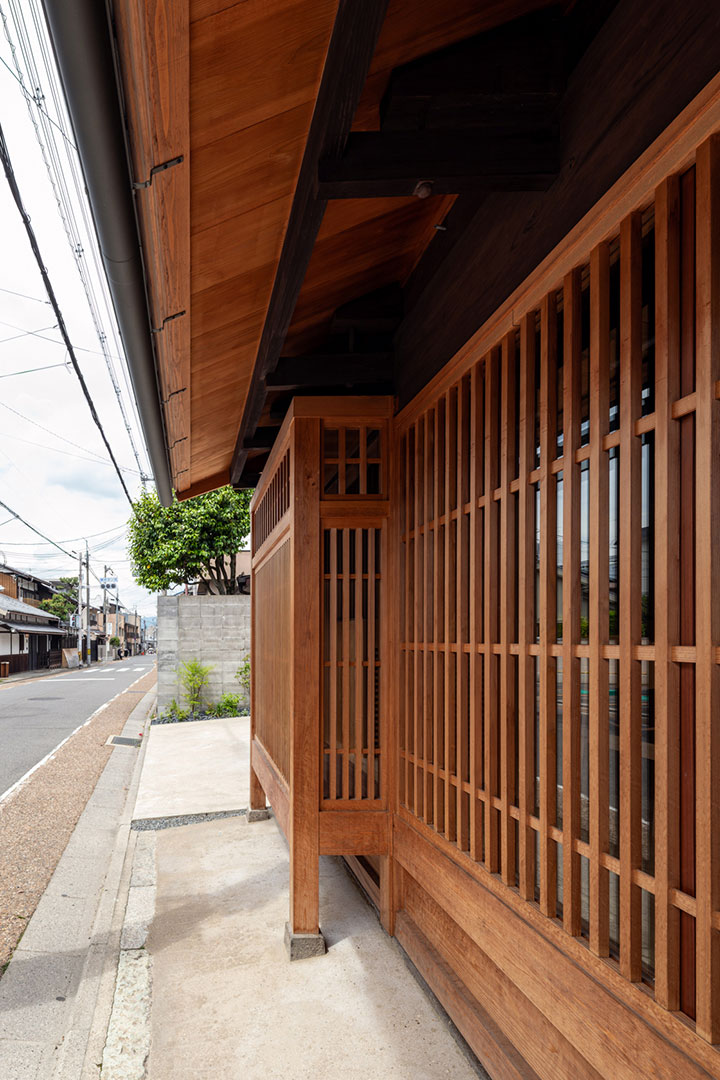
150年の歳月を刻むこの京町家は、かつて伏見街道の米屋として地域の交流を支えてきました。私たちは格子や虫籠窓といった伝統的な意匠を保存・継承しながら、光と風が通り抜ける既存の建物に現代的な透明性を加えることで、地域の歴史と現代性が調和する空間へと再生させました。古い建物が持つ深い陰翳と、洗練された静寂がひとつに重なり合う空間の中で、時空を超えた豊かな時間をお過ごしください。
With a history spanning 150 years, this Kyoto machiya once served as a local rice
shop on the historic Fushimi Kaido Road, long acting as a vital hub for the
surrounding community.
We have carefully preserved its heritage through key elements, such as the iconic
koshi (wooden lattices) and mushiko-mado (plaster-framed windows), while introducing
a contemporary sense of openness and transparency that allows light and breeze to
flow freely throughout.
Step into a space where local history meets contemporary elegance. We invite you to
relax and enjoy a moment of profound peace, where the deep shadows of the past meet
the refined stillness of the present.
Location
東福寺エリアは、かつて京都と大阪を結ぶ重要な街道の拠点として発展しました。
現在は、JR奈良線と京阪本線の2路線が交差する利便性の高い場所であり、伏見稲荷や奈良、大阪方面への観光にも最適です。また、京都駅から1駅の東福寺駅から徒歩5分というアクセスにありながら、周辺には都会の喧騒を忘れる静かな時間が流れています。歴史ある門前町を拠点に、日中はアクティブに各地を巡り、朝晩は町家の静寂に浸る、贅沢な宿場町体験をお楽しみください。
Historically, the Tofukuji area flourished as a vital gateway connecting Kyoto and
Osaka. Today, it remains one of the city's most convenient hubs, located where the
JR Nara Line and Keihan Main Line intersect. This makes it an ideal base for
exploring Fushimi Inari, Nara, and Osaka.
Despite being just one stop from Kyoto Station and a short 5-minute walk from
Tofukuji Station, the neighborhood offers a peaceful escape from the cityʼs hustle
and bustle.
Immerse yourself in the luxury of a traditional "post-town" experience. Use this
historic temple town as your base to explore actively by day, then return to the
tranquil silence of our machiya at night.
Concept
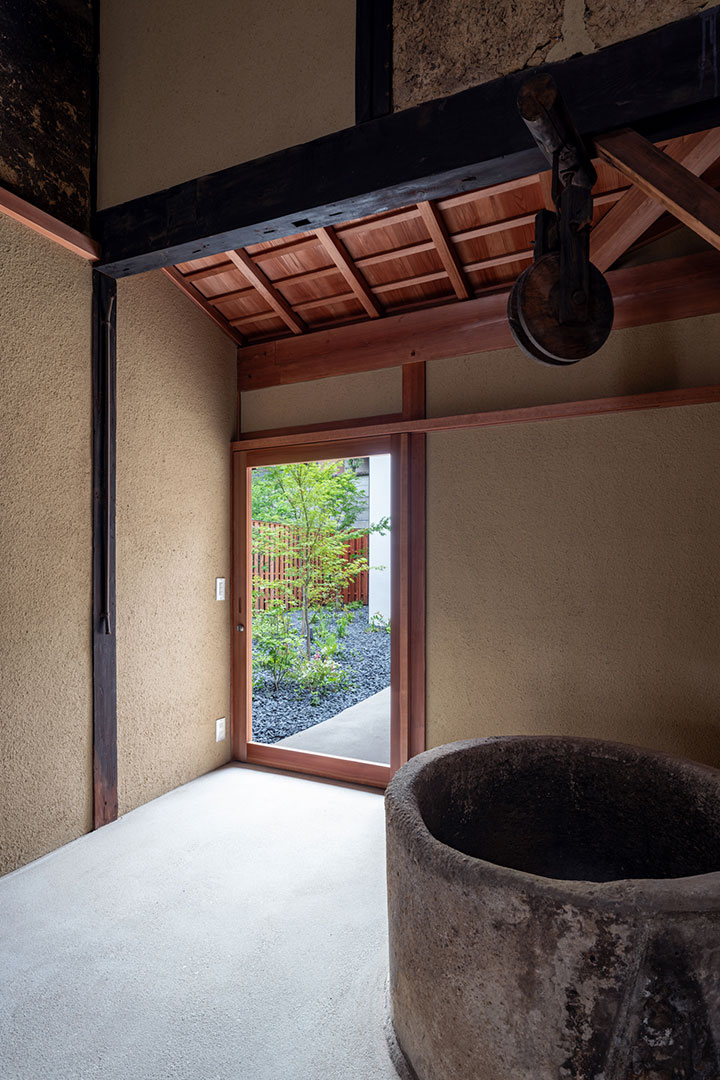
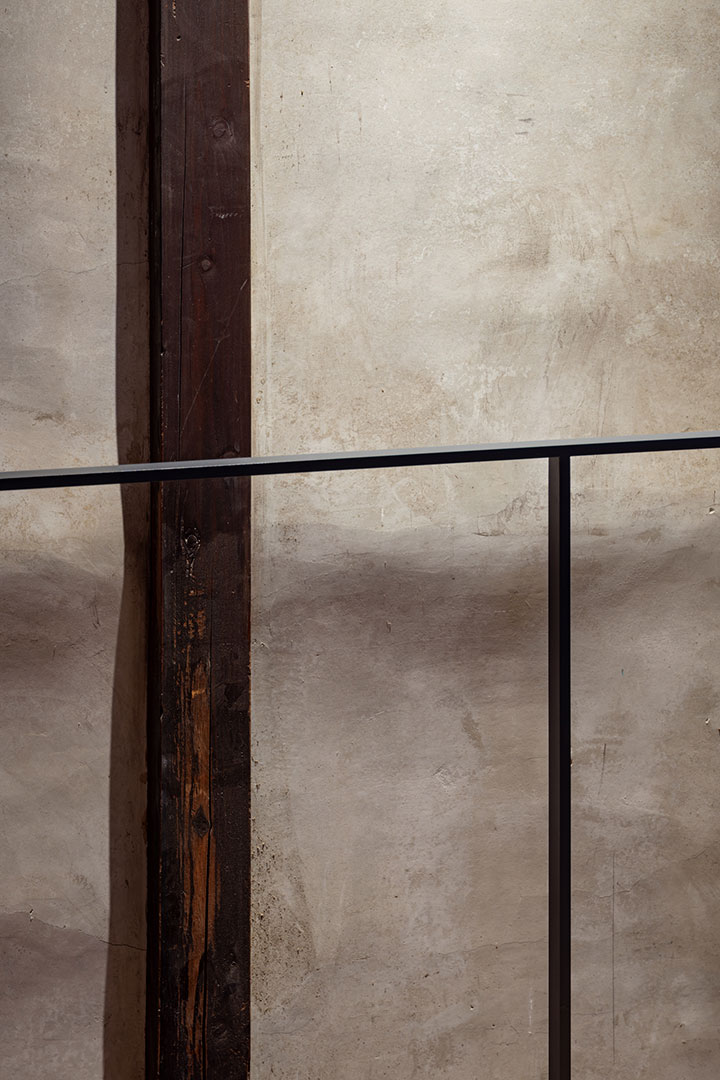
建築と時間における「±」の操作/この建築コンセプトは、建築と歴史や時間への論理的な介入を目指すことです。「−」の操作によって、不要な要素を取り除き、空間が持つ力強さや時間の堆積を純化させ、「+」の操作によって、既存の梁や土壁に現代的な要素を加えることで、新旧の素材の魅力を引き出しています。このような「±」を重ねることで、新旧どちらにも偏らない、過去と現在が対等に共存する静謐な空間が生まれることを目指しています。
The Interplay of "±" in Architecture and Time
Our architectural concept expands on what it means to renovate through a thoughtful
intervention in the flow of history and time.
Through the "−" process, where we removed unnecessary layers, we reveal the raw
strength of the space and the essence of its history. Through the "+" process, we
integrate contemporary elements into the original beams and earthen walls,
highlighting the unique textures of both old and new.
By layering these additions and subtractions, we have created a neutral space where
the past and the present coexist in perfect balance, belonging to neither era alone
but honoring both.
Interior
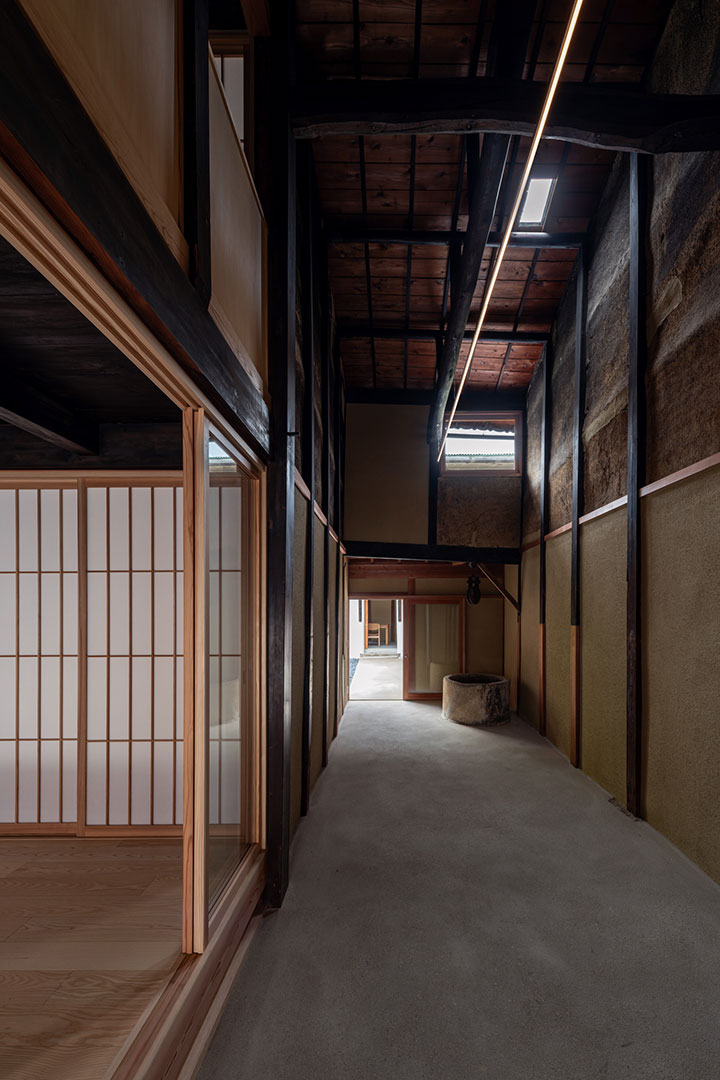
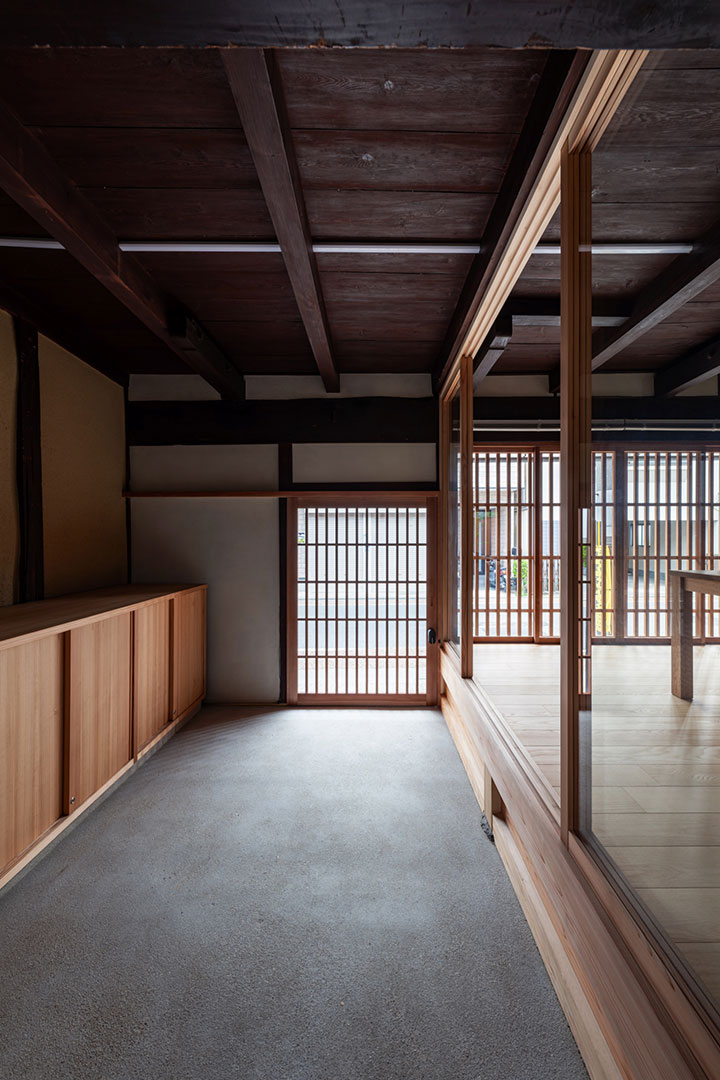
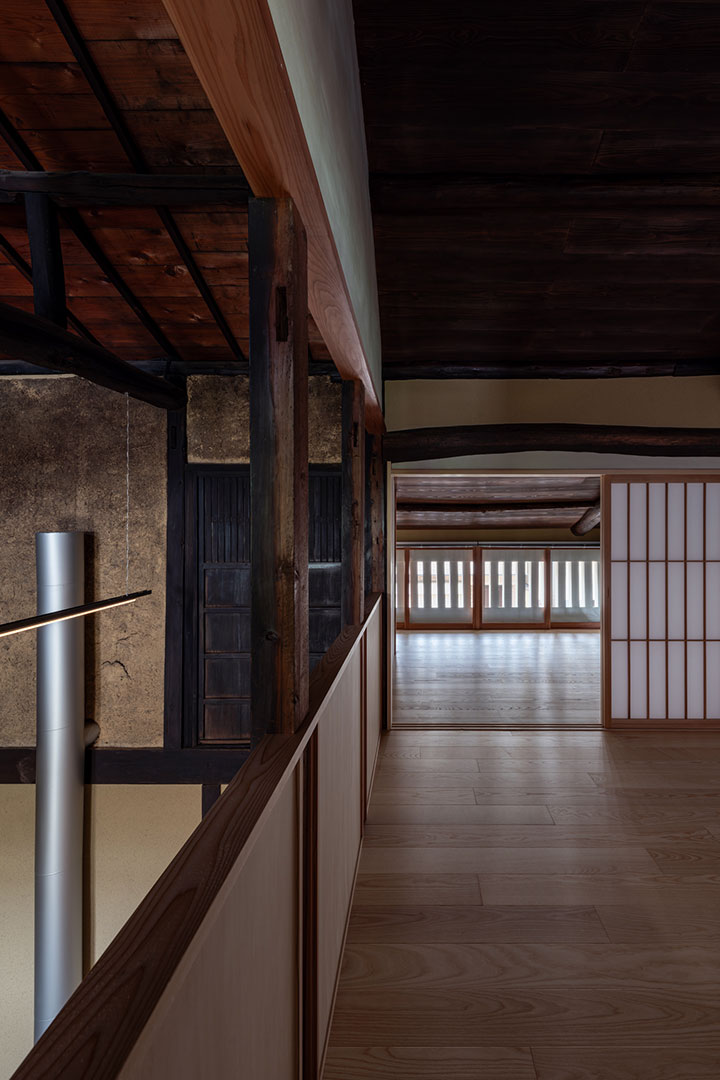
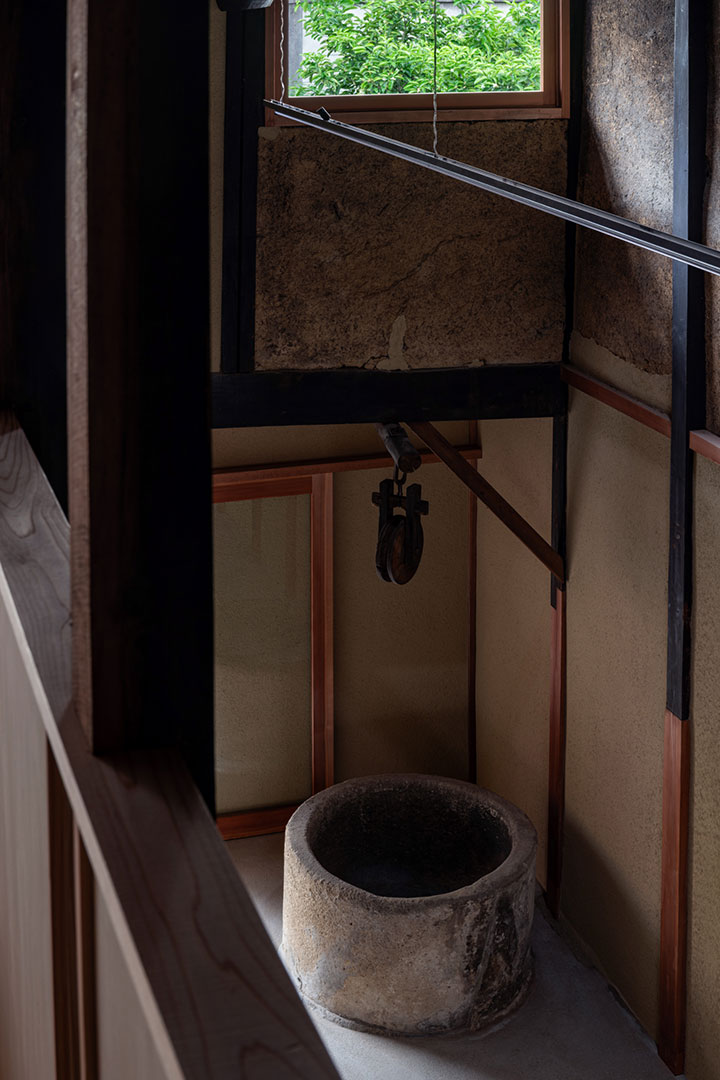
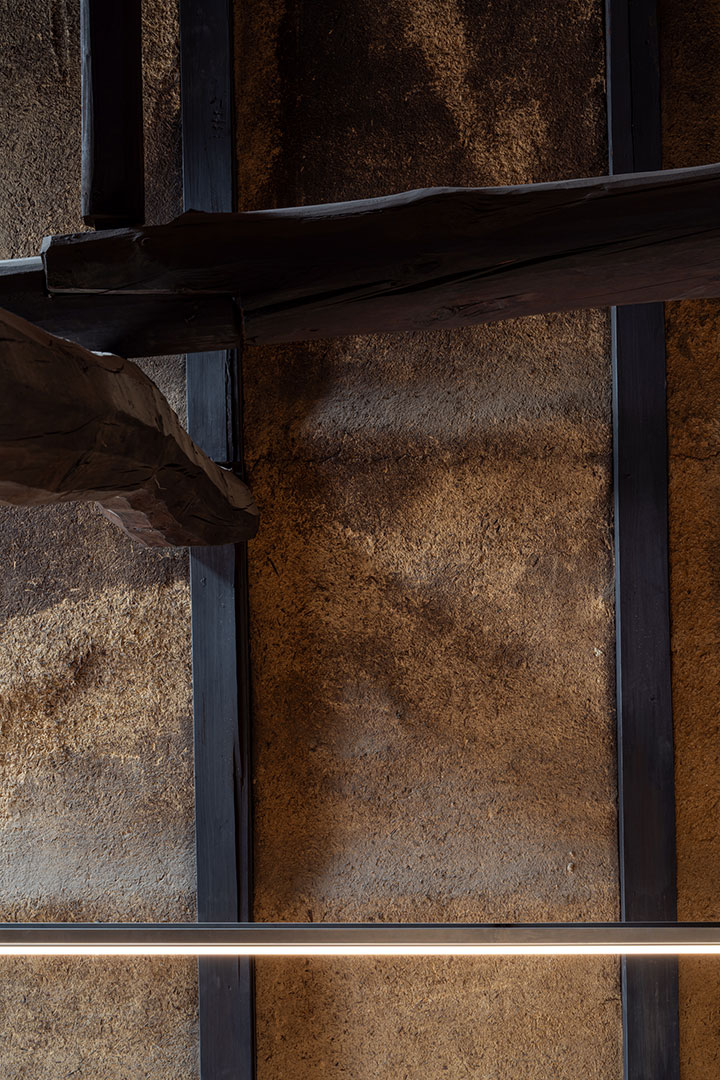
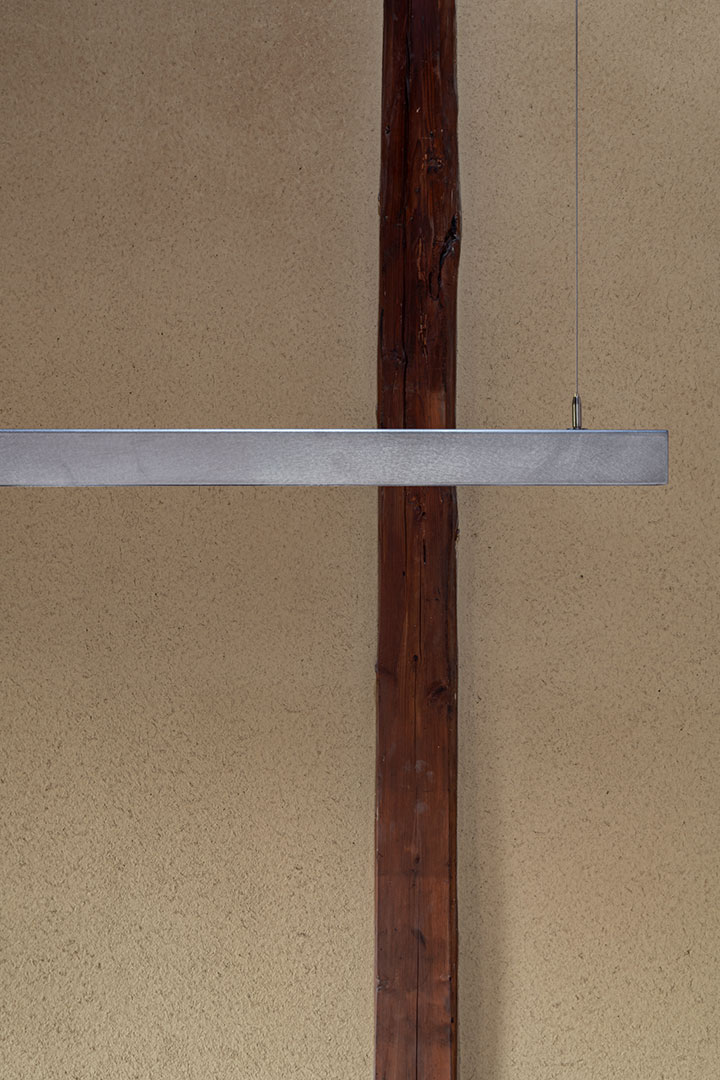
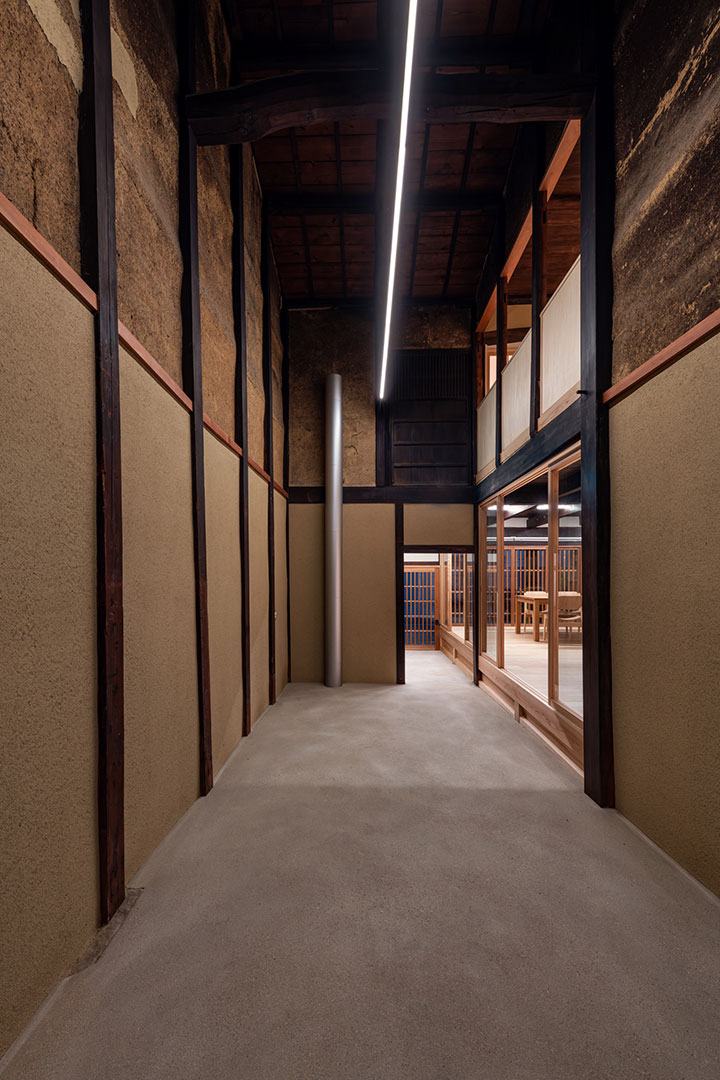
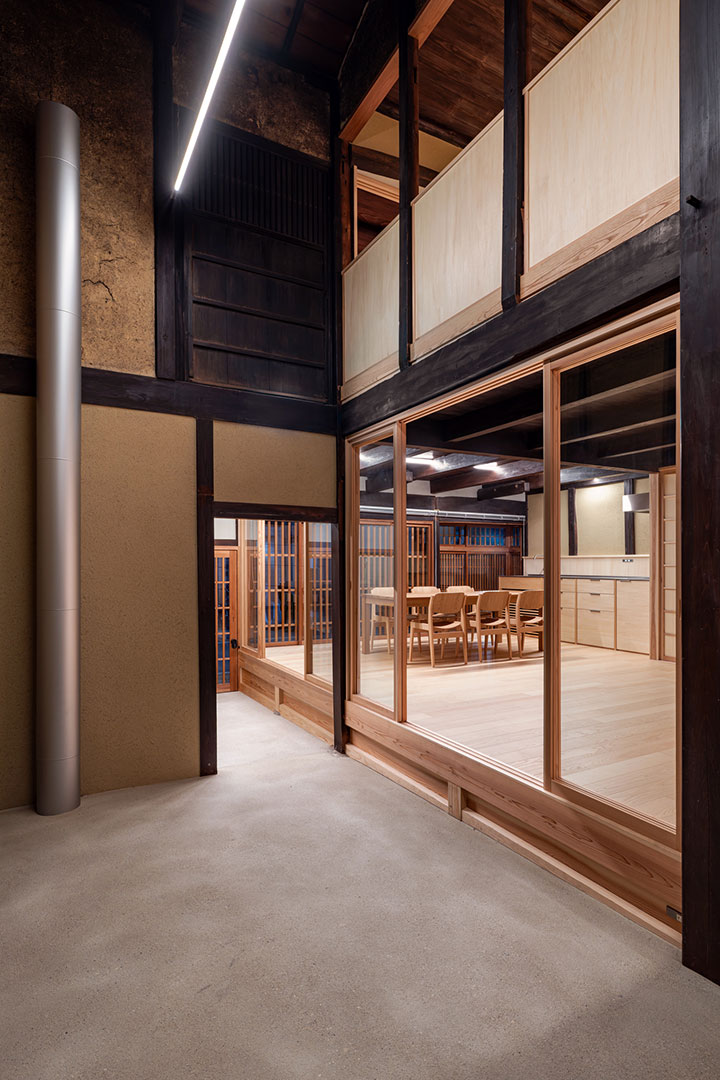
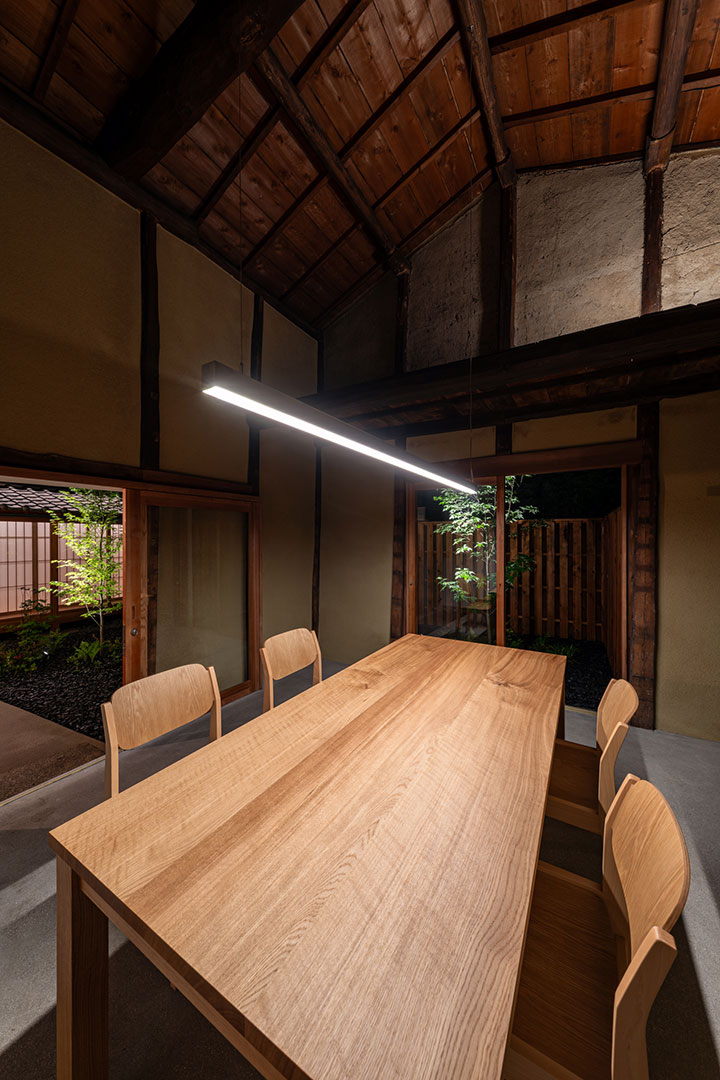
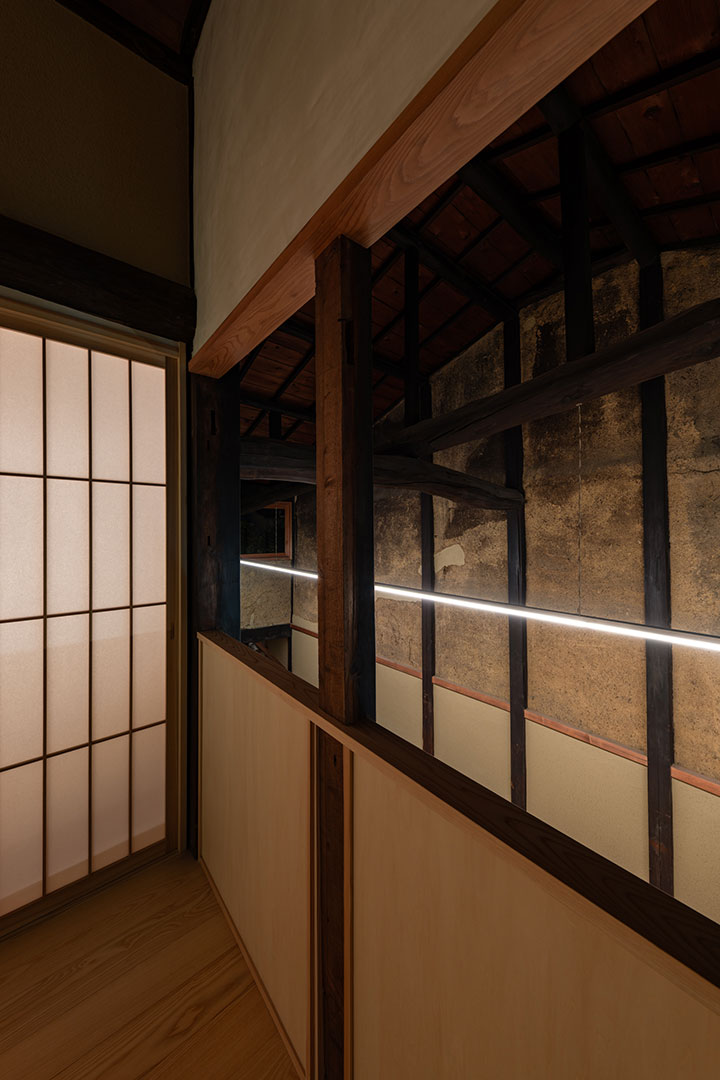
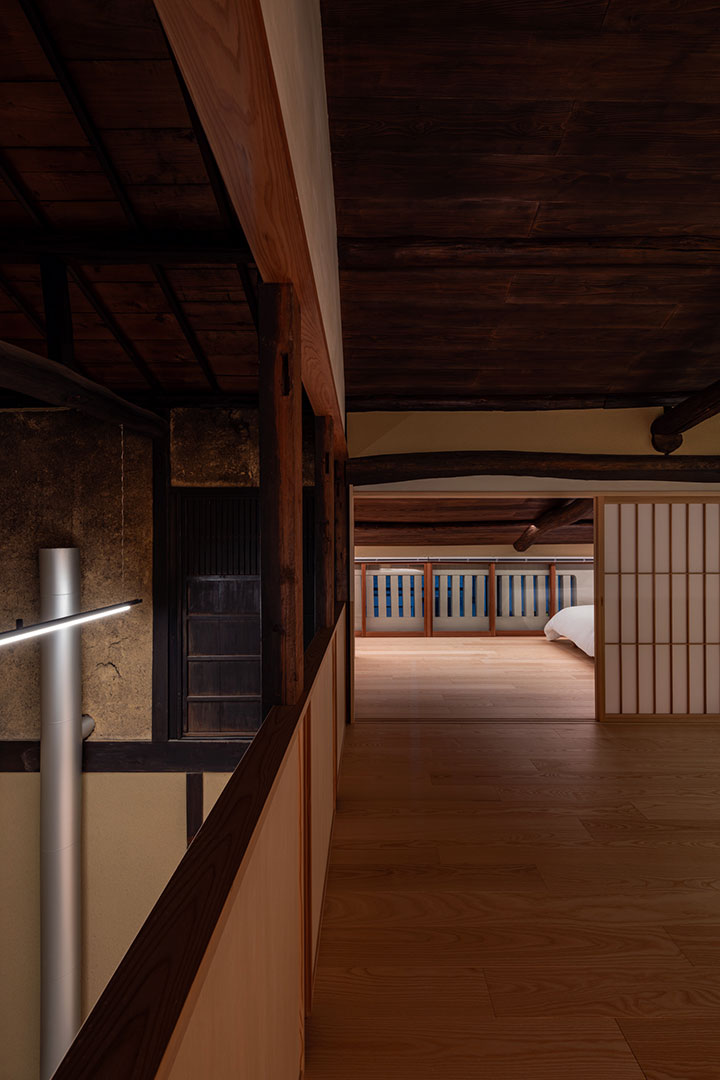
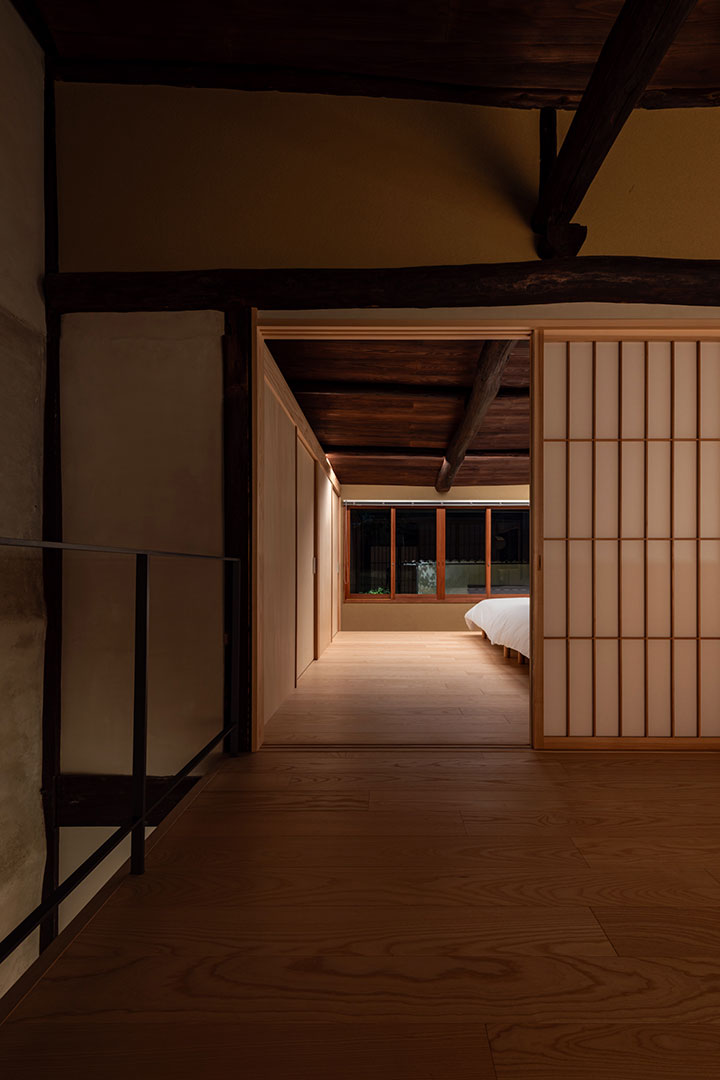
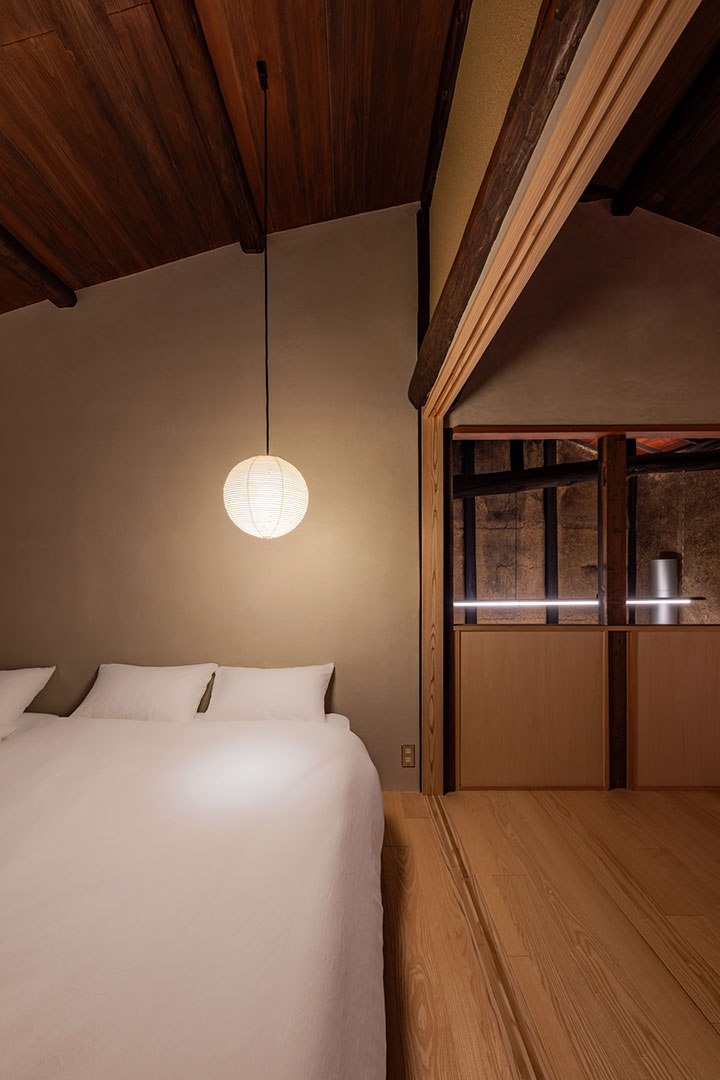
時間の重なりや歴史を尊重しながら、町家特有の「火袋」や「通り庭」の奥行きを最大限に引き出すことを意図しています。内部空間の特徴は、既存の古い梁や土壁に対峙する現代的なライン照明にあります。既存の構造体に操作を加えず、シンプルな線状の光を挿入することで、素材が持つ豊かな陰影を際立たせ、空間の奥行きや深みを浮かび上がらせています。過去の記憶を現代の文脈で読み解く光の演出により、既存の重厚な軸組が空間の中で浮遊し、新旧が並列に共存する時間の流れと静寂を生み出しています。
While honoring the layers of history, our design maximizes the unique sense of depth
found in the Hibukuro (the soaring, high-ceilinged ventilation space) and the
Tori-niwa (the traditional long earthen corridor).
A defining feature of the interior is the contrast between the original beams and
earthen walls and the sleek, modern line lighting. By introducing minimalist light
without altering the original structure, we highlight the rich textures and shadows
of the materials to bring a new sense of depth to the space.
This lighting "reinterprets" memories of the past through a modern lens. The heavy,
historic timber frame seems to float within the room, creating a serene flow of time
where the old and the new exist side-by-side in perfect silence.
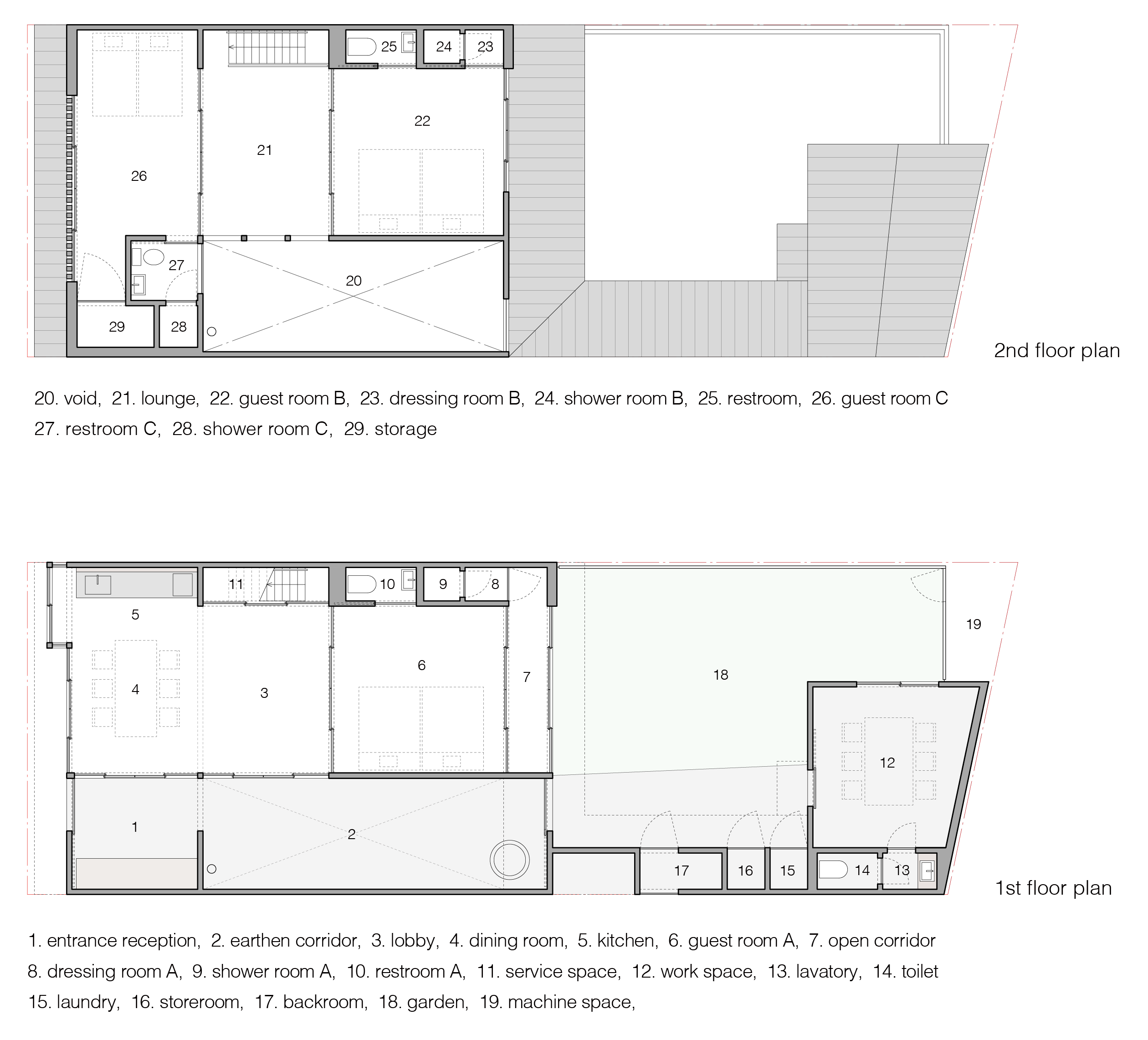
Plan